
₹2,041 Crore Investment, Just ₹6.33 Crore Return: CAG Raises Questions Over Tripura PSUs
Has thousands of crores of public money been invested in sectors that are failing to generate meaningful returns?
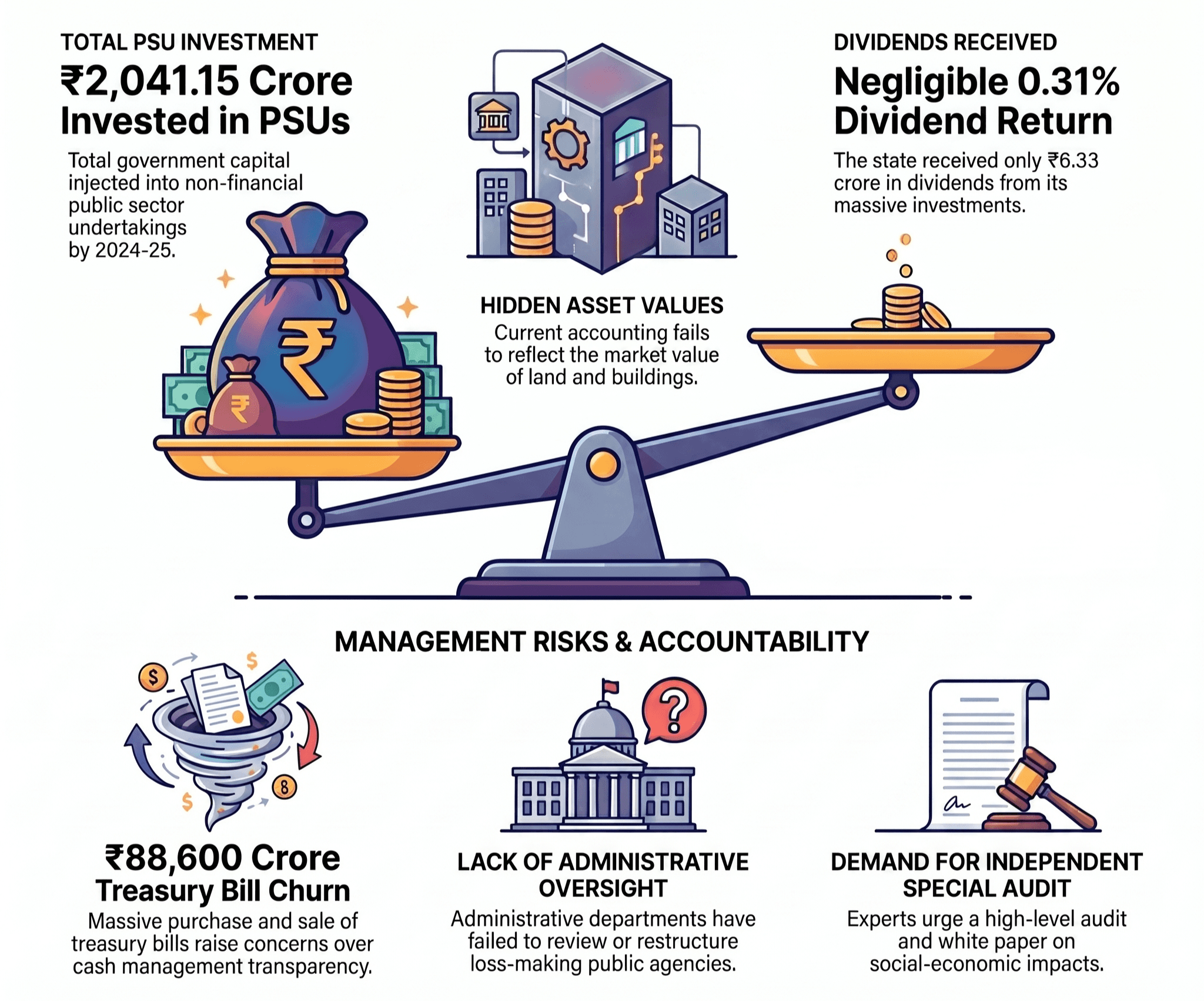
The latest report of the Comptroller and Auditor General (CAG) has raised serious questions over the financial management of Tripura, highlighting a huge gap between government investment and actual returns from public sector undertakings (PSUs).
According to the CAG report, by the end of the financial year 2024-25, the Tripura government’s total investment in non-financial Public Sector Undertakings (PSUs) stood at ₹2,041.15 crore. However, the return from this massive investment was only ₹6.33 crore, amounting to just 0.31% of the total investment.
The figures have triggered questions over the efficiency and performance of government-owned entities. The report has raised concerns over whether the government has conducted regular assessments of these investments and whether adequate steps have been taken to revive loss-making organisations.
The key question now being raised is: Has thousands of crores of public money been invested in sectors that are failing to generate meaningful returns?
The CAG report also pointed out weaknesses in the government’s asset management system. It observed that the current accounting practices do not clearly reflect the actual value of several government assets, including land and buildings.
This means the government’s true asset position, the current market value of these properties, and how effectively they are being utilised remain unclear in official records.
Experts believe that this is not merely an accounting issue but also a matter of long-term financial planning. Poor asset valuation and inefficient management can create serious risks for the state’s economic stability.
The report has also highlighted concerns regarding the government’s cash management through the Reserve Bank of India. During the financial year 2024-25, Tripura carried out treasury bill transactions worth massive amounts — purchasing treasury bills worth ₹44,686 crore and selling treasury bills worth ₹43,914 crore.
Despite such large-scale financial transactions, questions remain over whether the state’s overall financial position has improved significantly.
Observers argue that accountability should not be limited only to the finance department. Administrative departments, management boards of PSUs, and agencies responsible for planning and implementation must also explain the outcomes of these investments.
Public money, they point out, is not the property of any particular department. Every rupee collected from taxpayers carries a responsibility of transparency and accountability.
Another major concern is the continued existence of government organisations that have failed to provide adequate financial returns over the years. Questions are being raised about why performance audits of such entities have not been conducted regularly and who should be held responsible for repeated losses.
Public interest groups have demanded an independent high-level audit of all PSUs in Tripura, focusing on their financial health, investment performance, asset valuation and operational costs. They have also called for a white paper explaining the actual social and economic impact of government investments over the last decade.
While a CAG report is not a court verdict, it represents the observations of India’s constitutional audit authority and carries significant importance in assessing government financial management.
The report has presented a difficult picture before Tripura’s administration — large investments, minimal returns, unclear asset valuation and questions over financial efficiency.
The bigger question now is whether the government will act on these warnings and bring reforms, or whether the concerns raised by the audit will remain buried under official files.
Because while numbers can remain hidden inside government documents, public money ultimately demands a public answer.