
Selling Cheap, Buying Dear! Solar Users Demand Fair Pay
Allegations of Unfair Solar Power Pricing: Consumers Question TSECL’s Net Metering Policy
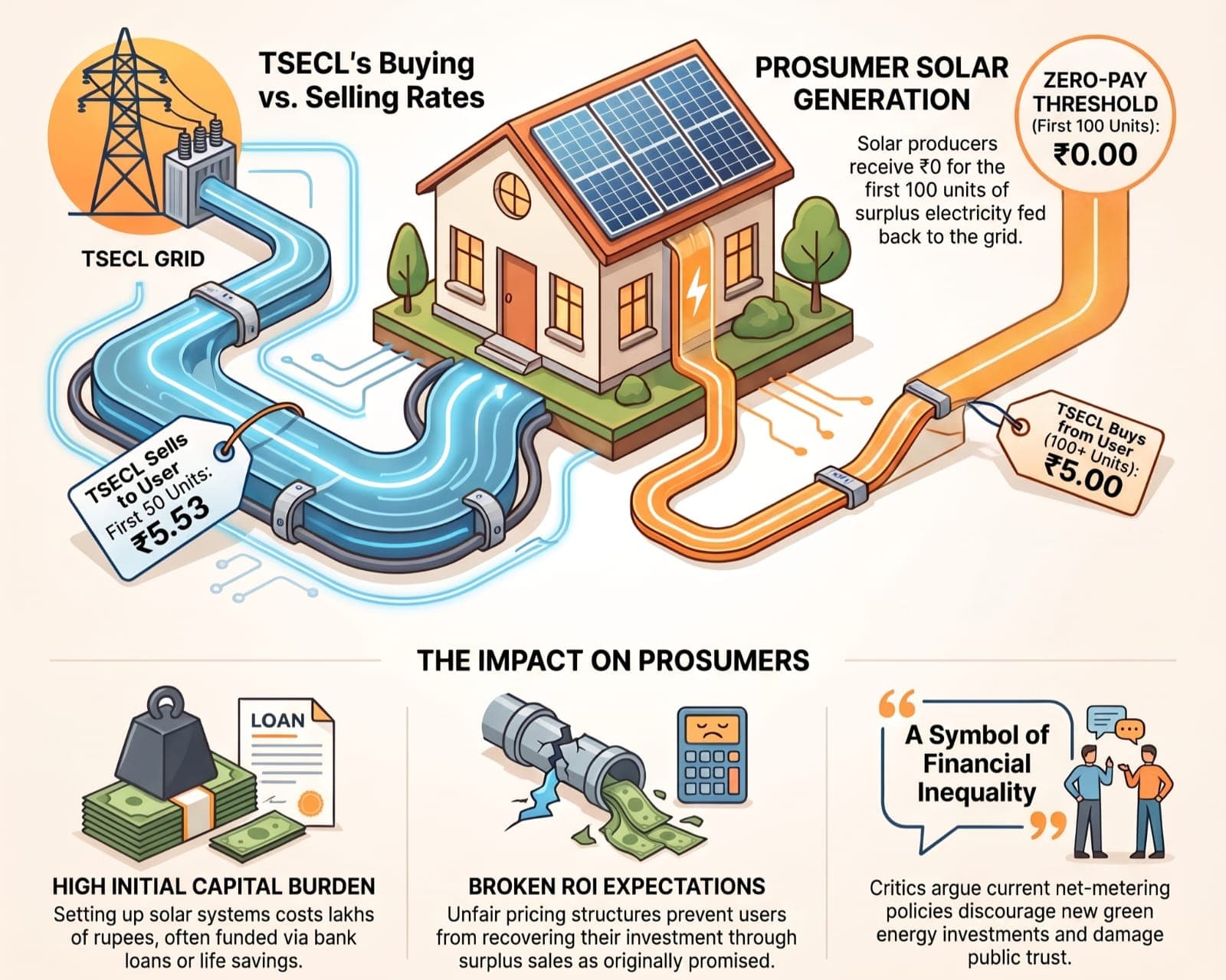
The state government and the Tripura State Electricity Corporation Limited (TSECL) have been encouraging households to adopt rooftop solar power systems, promoting renewable energy, electricity savings and greater public participation in power generation. While the initiative has been presented as a step towards a greener and more sustainable future, several solar power consumers have alleged that they are not receiving a fair price for the surplus electricity they supply to the grid.
According to consumers, after meeting their own electricity requirements through rooftop solar panels, the excess electricity generated is exported to the TSECL grid under the net metering system. However, they claim that the compensation structure is heavily skewed against them.
As per the allegations, consumers receive no payment for the first 100 units of surplus electricity supplied to the grid. Beyond that, they are paid a fixed rate of ₹5 per unit for the additional electricity exported.
Consumers argue that this pricing policy stands in sharp contrast to the rates at which TSECL sells electricity to domestic users. Under the current tariff structure, consumers are charged ₹5.53 per unit for the first 50 units of electricity, with higher rates applicable for the 51-150 unit, 151-300 unit and above 300 unit consumption slabs. These tariffs also apply to solar power users when they draw electricity from the grid.
This has led many solar consumers to question why electricity purchased from households is valued differently from the electricity sold back to them. They argue that the same commodity is being bought at one rate and sold at a higher rate without sufficient explanation.
Installing a rooftop solar system requires a substantial financial investment. Many households spend several lakh rupees, often through bank loans or years of personal savings, with the expectation that the sale of surplus electricity would gradually help recover the installation cost. According to consumers, the present payment mechanism has significantly affected those expectations.
Energy experts point out that encouraging "prosumers"—consumers who both generate and consume electricity—is essential for expanding renewable energy. They warn that if households do not receive fair compensation for the electricity they generate, public interest in investing in rooftop solar systems may decline, affecting the broader goal of increasing renewable energy adoption.
Consumers have also alleged that while TSECL strictly enforces timely payment of electricity bills and imposes penalties for delays, the same level of transparency and fairness is not reflected in determining the value of electricity supplied by consumers to the grid. They claim that the existing system treats solar power producers unfairly.
The issue has also sparked debate over the very objective of the net metering policy. Consumers are asking whether the system is designed to encourage citizens to invest in clean energy or whether the current pricing structure discourages such investments.
Experts associated with energy policy believe that if renewable energy targets are to be achieved, the electricity purchase price, net metering framework and billing settlement mechanism should be made more transparent and consumer-friendly. Without such reforms, they say, the objective of promoting green energy could become more difficult to achieve.
Affected consumers have demanded a review of the policy under which no payment is made for the first 100 units of surplus electricity and only ₹5 per unit is paid thereafter. They have also sought a detailed public explanation from TSECL regarding the basis on which these rates have been determined.
They have further called for a review of the pricing mechanism to ensure that it complies with the regulations approved by the Electricity Regulatory Commission and that no discrimination exists in the valuation of electricity supplied by rooftop solar consumers.
Consumers argue that if people are encouraged to invest lakhs of rupees in solar power systems but are not adequately compensated for the electricity they contribute to the grid, questions are bound to arise over whether the scheme truly promotes renewable energy or simply places a greater financial burden on consumers.
They have urged TSECL and the concerned authorities to examine these allegations impartially and, if necessary, reconsider the existing pricing policy so that the objectives of promoting renewable energy and protecting consumers' legitimate interests are balanced fairly.